
What Are The Best Natural Playground Materials: Quick Tips for Educators
A nature playground isn’t just a place to play — it’s an outdoor classroom that sparks creativity, collaboration, and confidence. Here’s some tips on natural playground materials that can make your playground both inspiring and practical.
Natural Playground Materials That Make a Difference
-
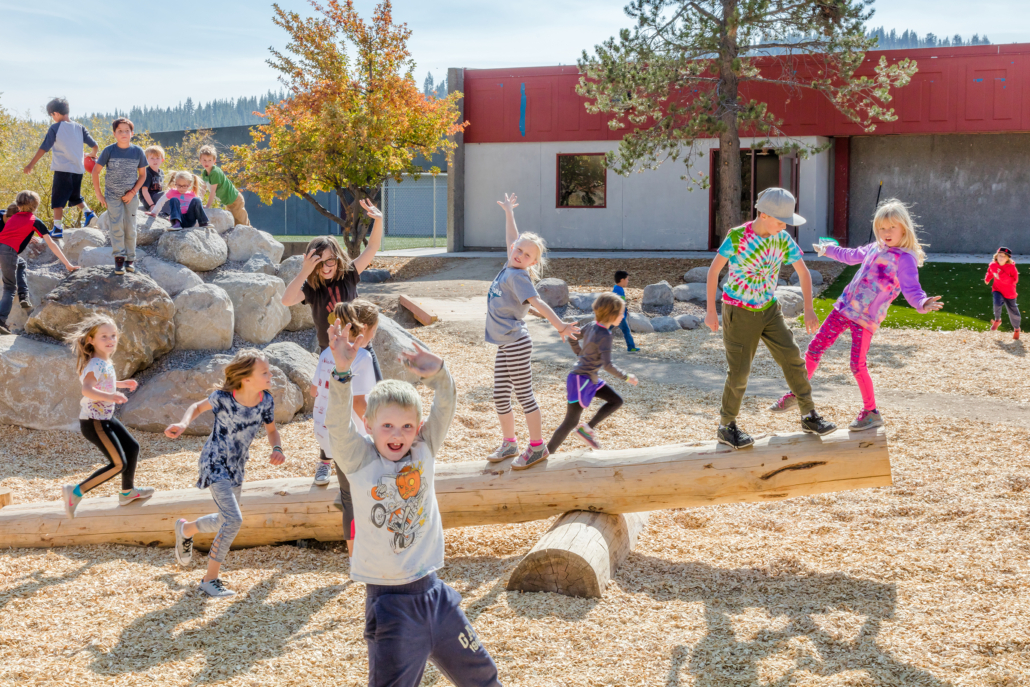
Logs – Great for balancing and imaginative play. Keep them off the ground to help make logs last longer.
-
Boulders – Durable and multi-purpose. Place carefully to keep students safe some logs can have sharp edges and points.
-
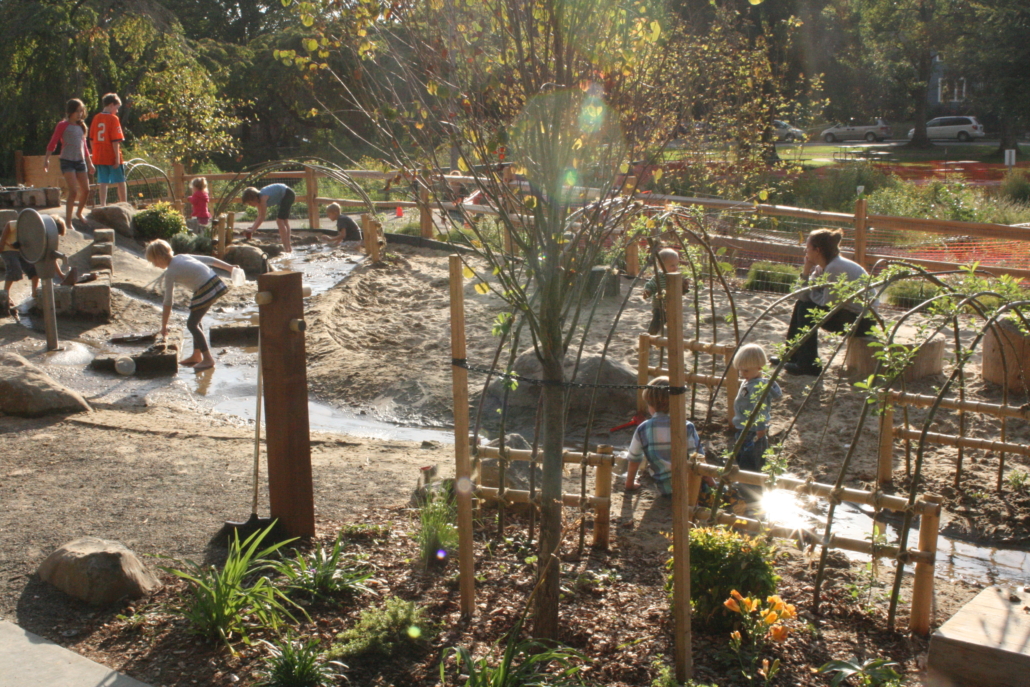
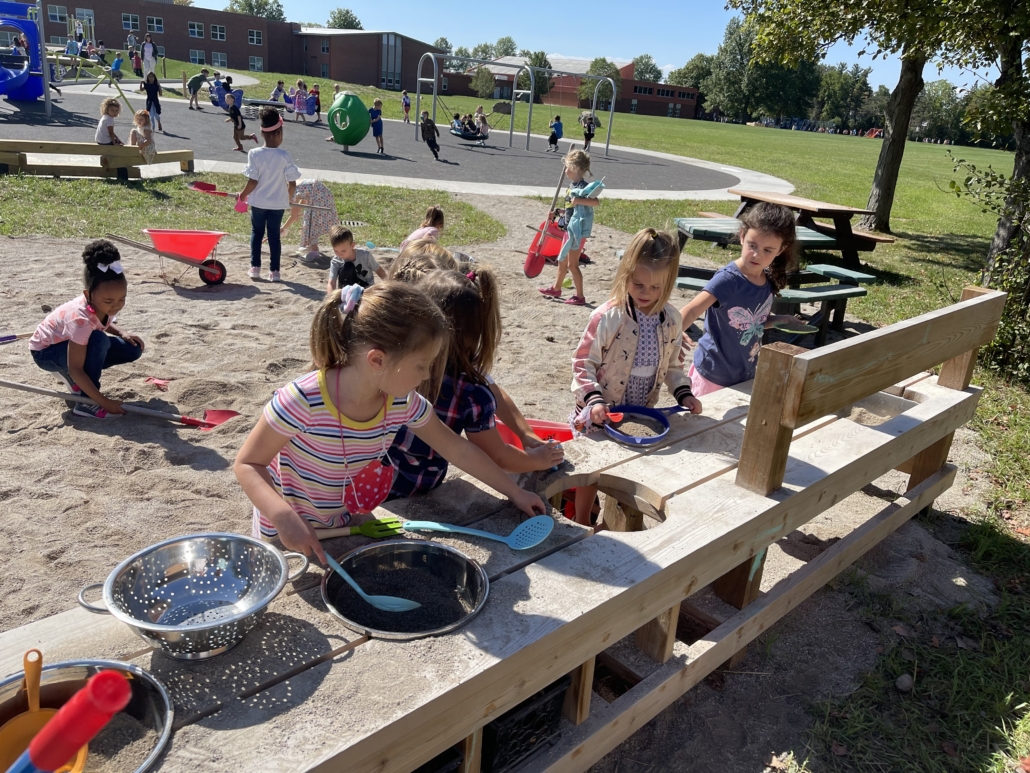
Sand – Dig, build, and explore textures in sand play areas. Use contained areas to prevent mess. Know before hand that it will go everywhere!
-
Loose Parts – Crates, planks, sticks, stumps … let students build and create. Rotate and store to keep them exciting.
-
Plants – Trees, shrubs, and sensory-friendly plantings offer shade, texture, and discovery opportunities.

Real-World Example: Buttercup Hill Preschool Nature Playground
At Buttercup Hill Preschool (Oregon):
-
8–10 play zones including sand, boulders, custom wood structures, and a loose parts fort-building area. Each area utilized different natural playground materials.
-
Students collaborated, experimented, and built structures that changed daily
-
Lesson: Give children choices and flexibility — it drives curiosity and engagement. Even with low finds work area by area and transform watch zone into a hand-on nature space.
Choosing Materials: Our Principles
-
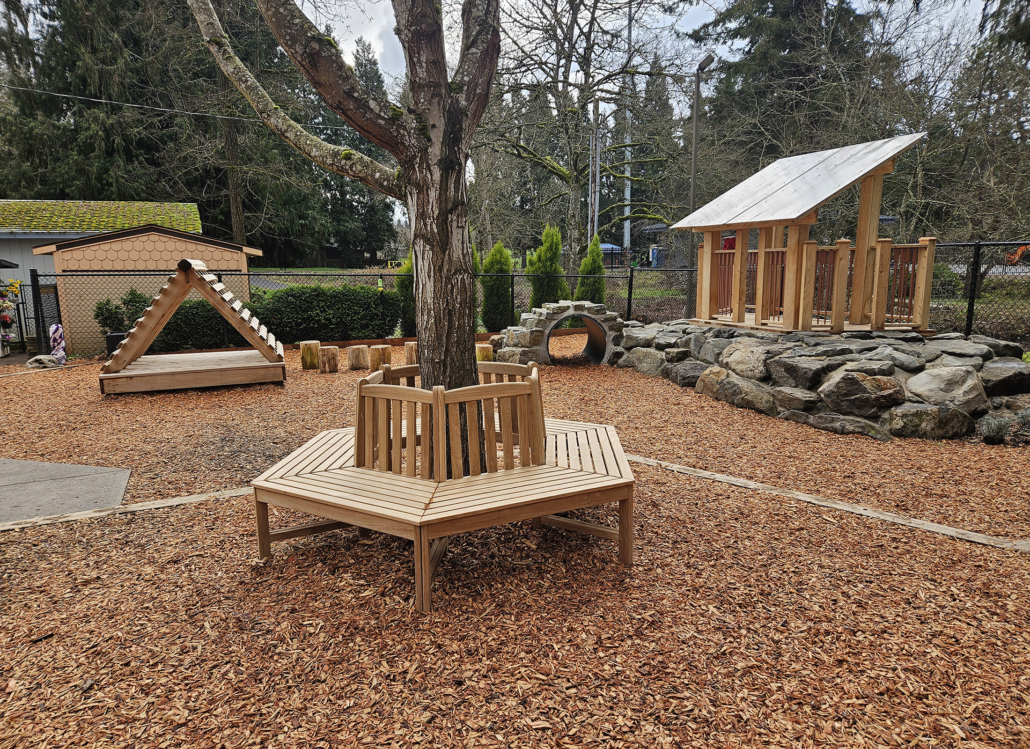
Safety & Durability – Students explore with their whole bodies; materials must hold up.
-
Play & Creativity Potential – Materials should invite imagination, not limit it.
-
Natural Feel – Kids connect more deeply with wood, stone, sand, and plants than plastic alone.
Common Mistakes with Natural Playground Materials
-
Using natural-looking materials that don’t last, leading to maintenance issues
-
Failing to scaffold use for teachers and students
-
Ignoring long-term planning; even small planting or sand areas can have a big impact
- Not planning for materials movement. Loose surfacing, loose parts, and plant materials will move around! Plan for this, don’t ignore it.
Making the Most of a Limited Budget
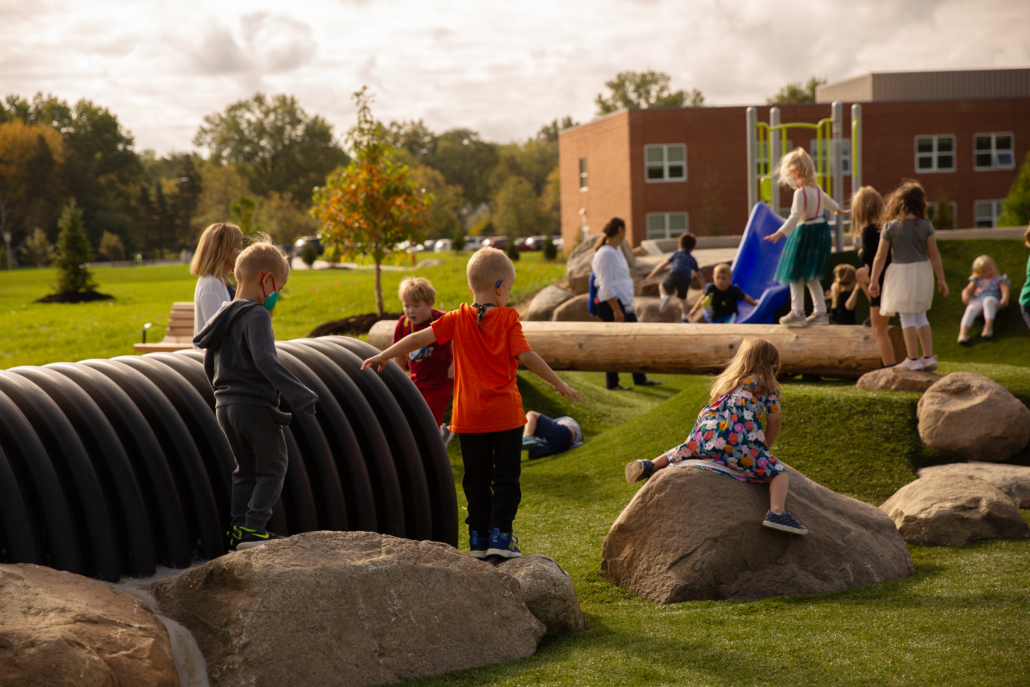
Focus on ground-level, nature-focused play:
-
Sand & water tables – Sensory exploration
-
Mud kitchens – Messy, creative play
-
Loose Parts Play – bring in pieces for child led exploration
Tip: Start with one “wow” space and let students shape it. Engagement grows — without overspending.
Final Takeaway
A well-designed nature playground is safe, flexible, and endlessly engaging. By choosing the right materials and letting students explore, you can create a space that’s as educational as it is fun.