
Planning Natural Playgrounds and Green Schoolyards for Private Schools
Designing Private School Green Schoolyards That Inspire Learning, Creativity, and Enrollment
Independent schools across the country are rethinking how their campuses support learning. As education shifts away from rote worksheets and toward creativity, collaboration, and real-world problem solving, outdoor spaces are becoming a powerful extension of the classroom. Private school green schoolyards and natural playgrounds are appearing in many school campuses.
A thoughtfully designed private school green schoolyard or natural playground does more than provide time to run around at recess. It reinforces a school’s mission, supports student-led learning, strengthens enrollment marketing, and creates daily moments of joy and connection for students.
At Learning Landscapes Design, we partner with private schools nationwide to create natural playgrounds and outdoor learning environments that align with educational values and long-term campus goals. Below, we share how this approach works—and what it looks like in practice.
Discuss Your School Project
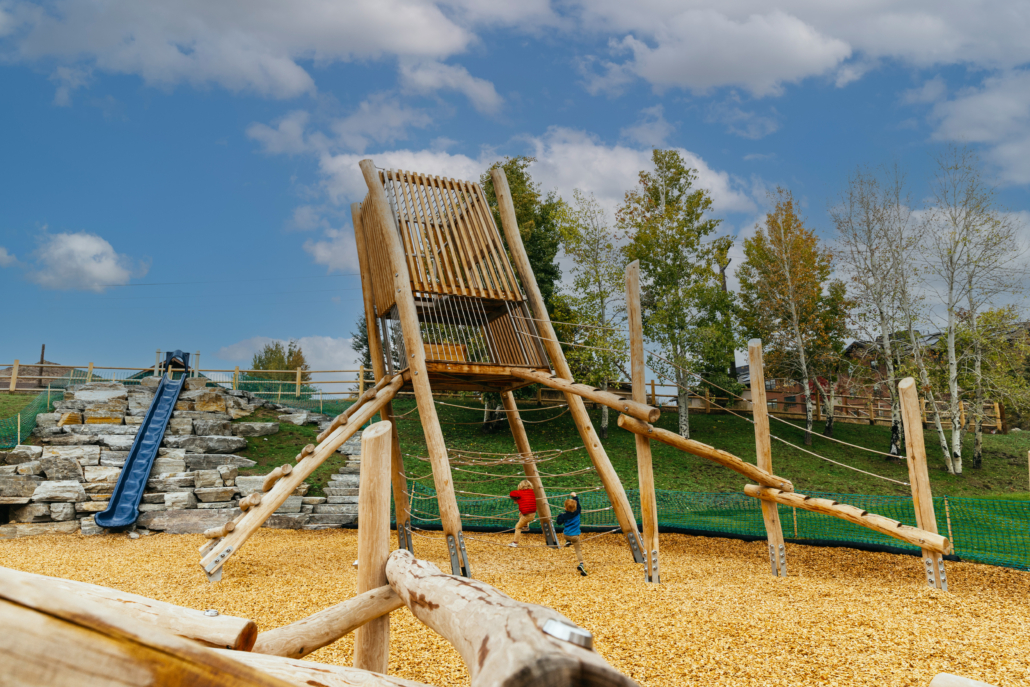
Why Private Schools Are Investing in Natural Playground & Green Schoolyard Design
For Heads of School and facilities leaders, campus improvements must serve multiple goals at once. Natural playgrounds and outdoor classrooms consistently deliver on several priorities:
Supporting Student-Led, Experiential Learning
Private school green schoolyards and natural playgrounds encourage children to:
- Test ideas and build solutions
- Collaborate and negotiate with peers
- Take appropriate risks and learn from failure
- Engage hands-on with materials and systems
These experiences mirror the skills schools are intentionally cultivating inside the classroom—creativity, leadership, adaptability, and problem-solving.
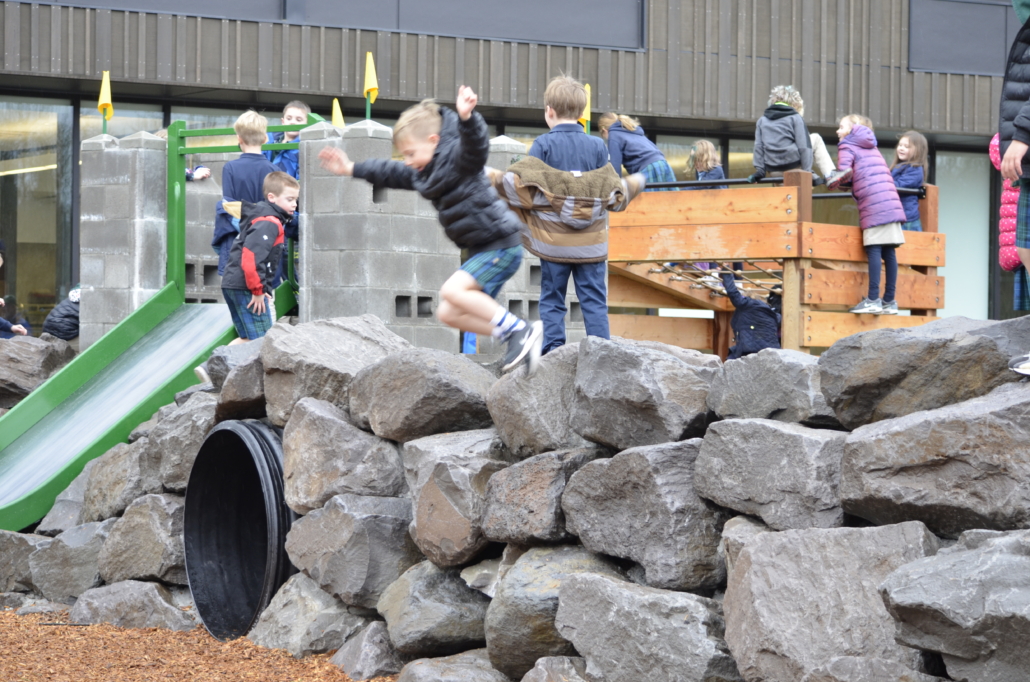
Aligning with School Mission & Educational Philosophy
Whether rooted in progressive education, expeditionary learning, faith-based values, or whole-child development, natural play environments support:
- Curiosity and inquiry
- Connection to the natural world
- Social-emotional development
- Stewardship and responsibility
A well-designed outdoor space becomes a visible expression of what a school believes about learning. The team at Learning Landscapes Design will help you translate your educational values to a design that is buildable and fits your site.
Strengthening Enrollment & Advancement Efforts
Outdoor environments are one of the most powerful tools for:
- Campus tours
- Family open houses
- Marketing photography
- Donor storytelling
Prospective families immediately understand the value of a school that invests in meaningful, engaging outdoor spaces. These projects often become signature campus features that distinguish a school in a competitive admissions landscape.
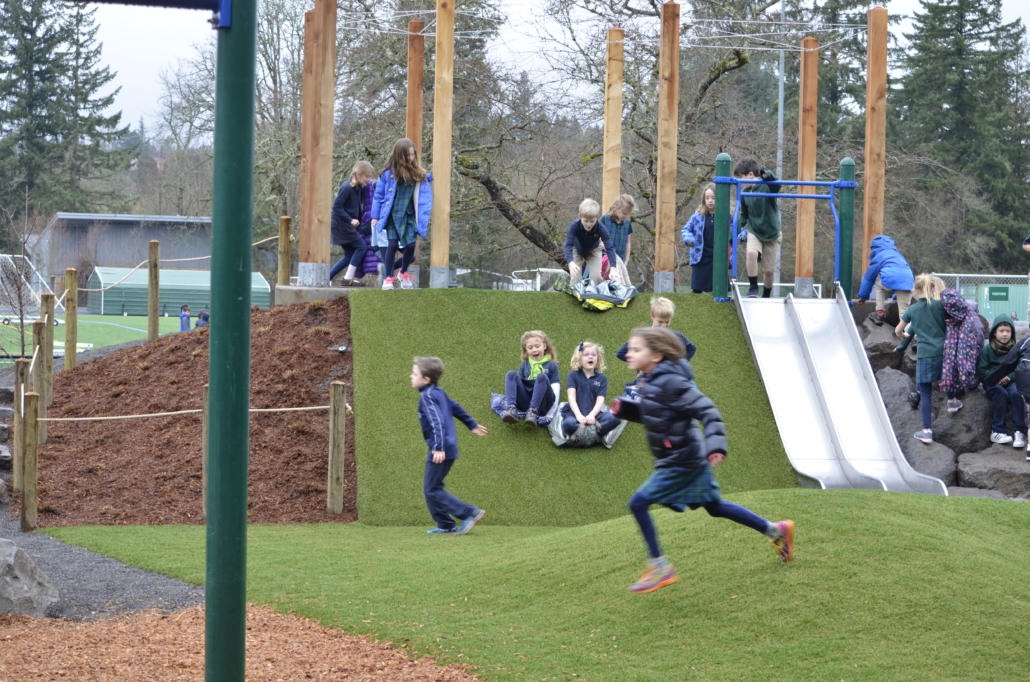
What Makes a Successful Private School Natural Playground and Green Schoolyard
A strong green schoolyard is not a catalog of equipment—it’s a custom-designed learning landscape. Key elements often include:
- Loose parts and open-ended materials for creativity and problem-solving
- Landform, boulders, logs, and planting that invite exploration
- Outdoor classrooms that support hands on curriculum integration (not just desks outside)
- Spaces for quiet reflection and social gathering and small group work
- Inclusive design strategies that support a wide range of abilities, ages, and interests
Equally important is ensuring these environments meet safety standards, are maintainable long-term, and integrate smoothly into campus operations.
Safety and Maintenance in Natural Playgrounds and Green Schoolyards
A successful natural playground balances challenge, creativity, and responsibility with clear safety frameworks and long-term stewardship. Safety and maintenance are not add-ons—they are integral to the design of a resilient, defensible, and well-functioning outdoor learning environment.
Key considerations include:
- Thoughtful application of national safety standards (including ASTM guidelines), interpreted specifically for nature-based and site-built play elements rather than off-the-shelf equipment
- Risk-aware design strategies that support healthy challenge while minimizing hazards, helping students learn judgment, balance, and self-regulation
- Durable, repairable materials selected for long-term outdoor use, climate conditions, and realistic school maintenance capacity
- Clear access for inspection and upkeep, including surfacing, drainage, and edge conditions that allow facilities teams to monitor and maintain the site efficiently
- Ongoing maintenance guidance and documentation that supports staff training, seasonal care, and long-term preservation of both safety and play value
When safety and maintenance are integrated from the outset, natural playgrounds become spaces that are trusted by leadership, manageable for facilities teams, and deeply engaging for students—year after year.
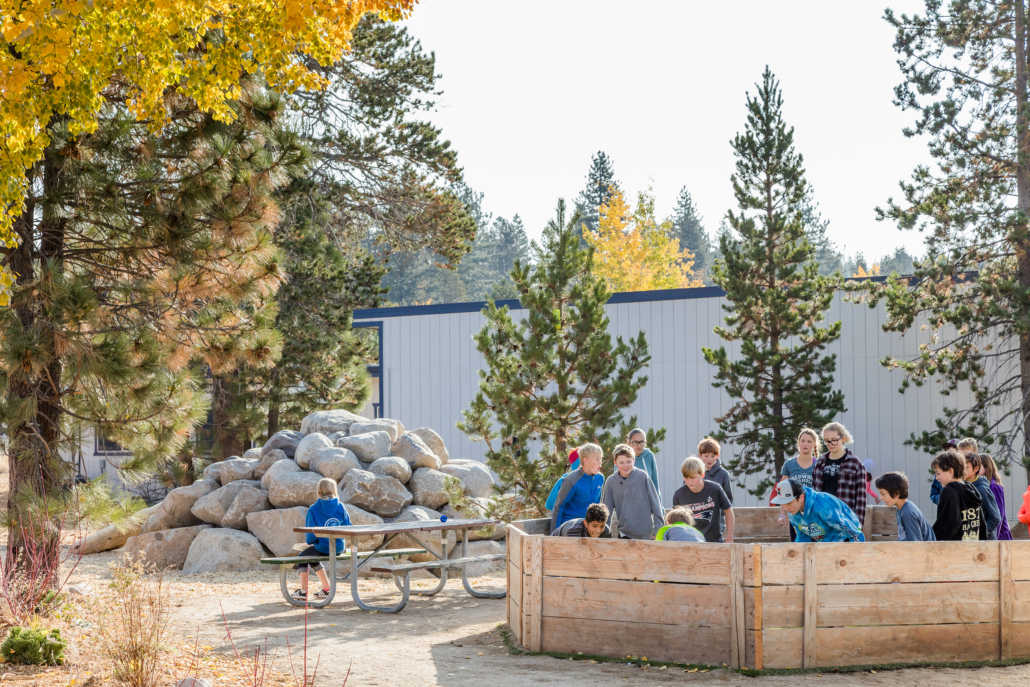
Case Studies: Green Schoolyards and Natural Playgrounds Design for Private Schools
Oregon Episcopal School — Portland, Oregon
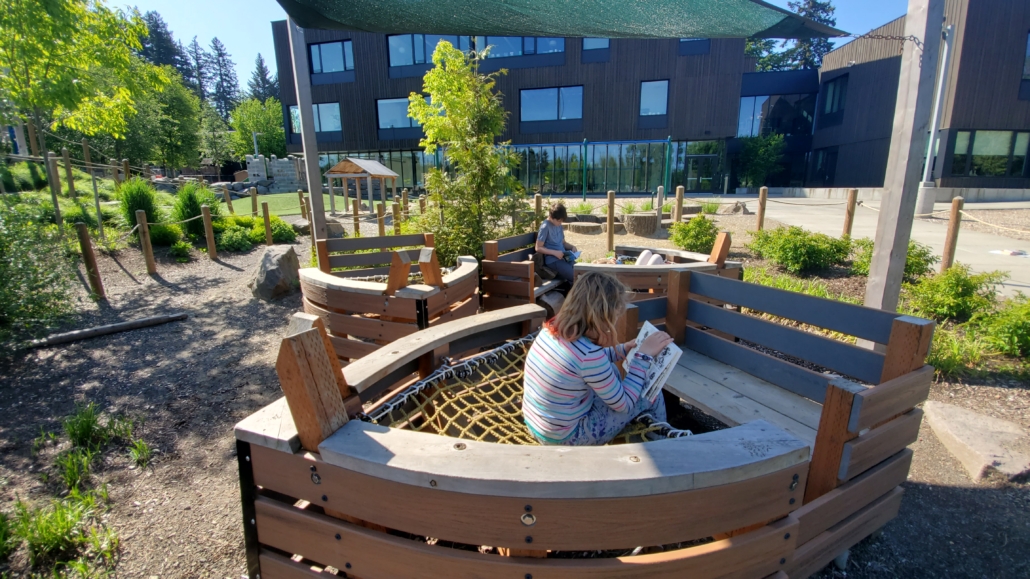
Following a major building renovation, Oregon Episcopal School wanted a playground that matched the quality of its campus and reflected its hands-on, project-based learning philosophy.
Learning Landscapes Design partnered with a student design team to identify priorities, survey their peers, develop design concepts, and present recommendations to school leadership. LLD then combined their ideas into a cohesive playground design that maximized play opportunities within a limited space.
One standout feature was a custom reading boat with hammock-style netting, benches, and shade, creating a peaceful retreat alongside more active play areas. The result was a playground that balanced different student needs while giving children genuine ownership of their outdoor learning environment.
Sierra Expeditionary Learning School — Truckee, California
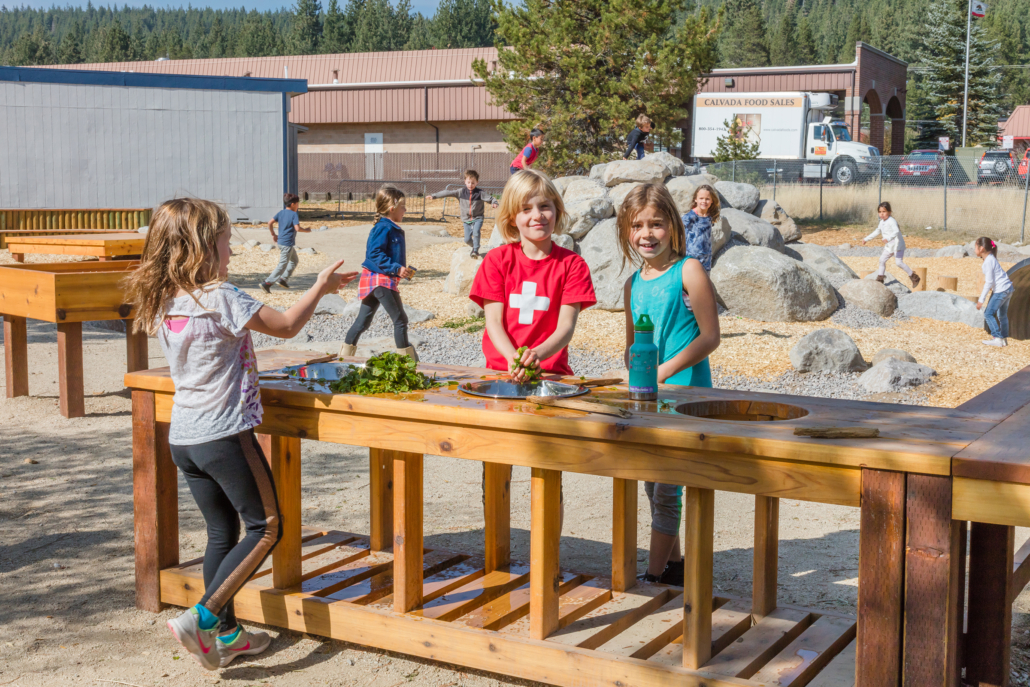
Sierra Expeditionary Learning School wanted to transform its traditional playground into a natural learning environment that reflected its adventurous, project-based curriculum. Learning Landscapes Design collaborated with school staff and leadership through a design workshop to identify priorities for recess, physical education, student projects, and outdoor classroom activities.
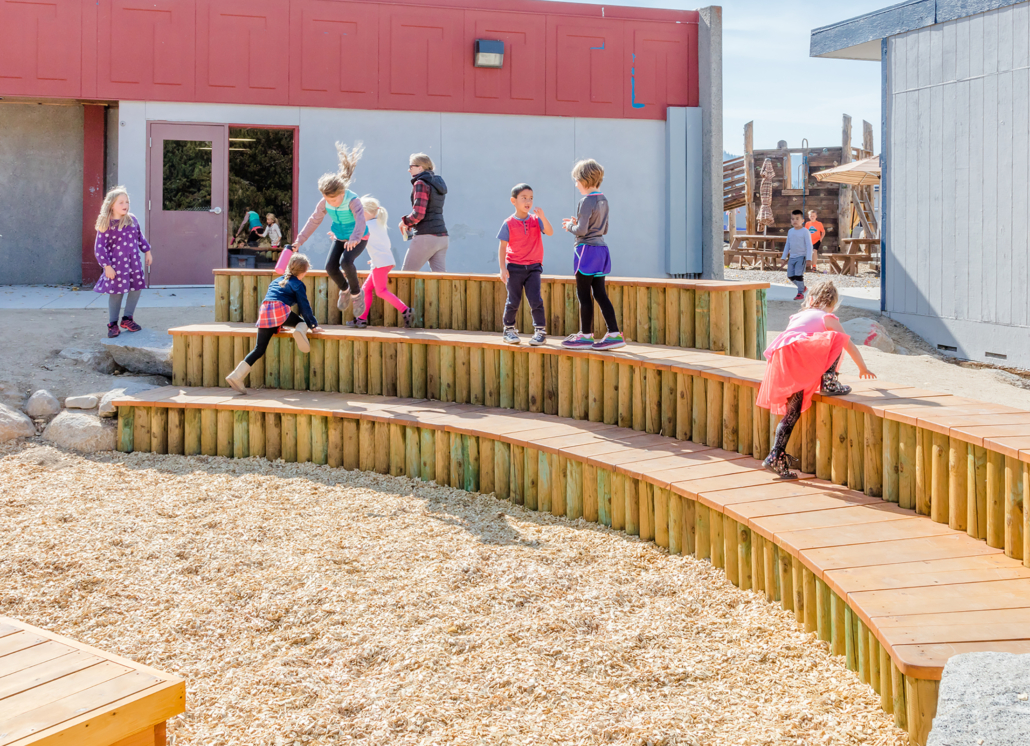
The greatest challenge was fitting a diverse play program into long, narrow spaces woven between existing buildings. LLD developed a cohesive design that addressed steep terrain, snow, drainage, mature trees, and supervision sight lines. The resulting playground features an amphitheater, play creek, outdoor classroom, parkour course, ball game area, and play mountain—creating opportunities for physical challenge, exploration, and hands-on learning throughout the school day.
Sun Valley Community School — Sun Valley, Idaho
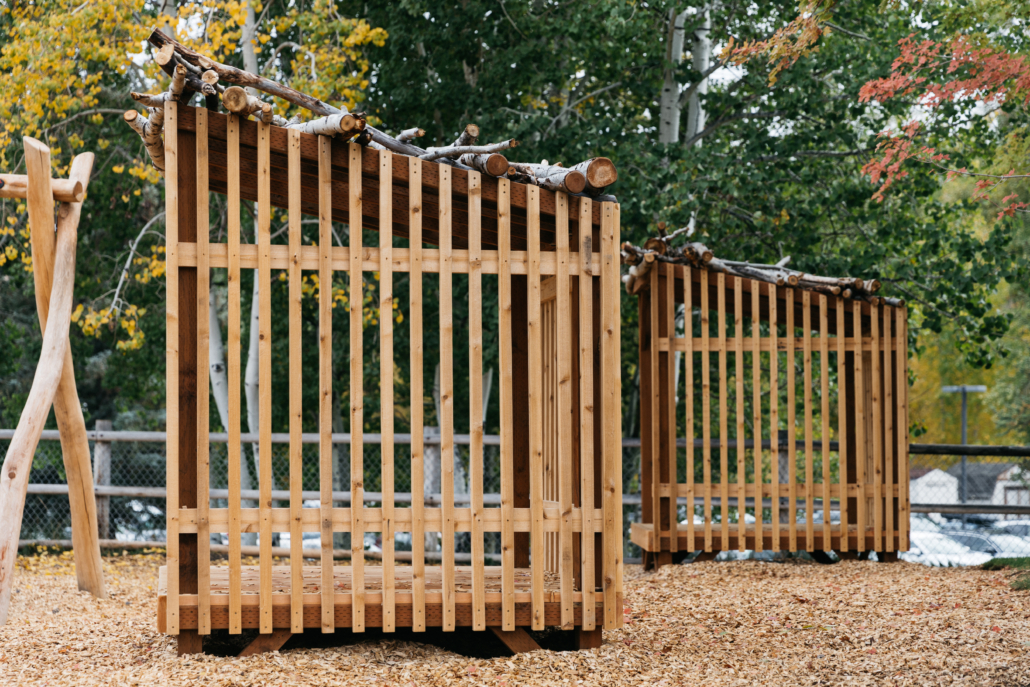
Sun Valley Community School wanted to transform its traditional playground into a natural learning environment that reflected its adventurous, outdoor-focused curriculum. Learning Landscapes Design collaborated with school leadership, staff, parents, and students to develop a playground that supported physical challenges, imaginative play, social connections, and year-round outdoor learning.
Through hands-on STEM design workshops, students surveyed classmates, evaluated the site, and developed their own playground concepts. LLD transformed the site’s steep terrain into opportunities for boulder climbing, a large embankment slide, and winter sledding. Students also helped design a custom hangout deck with slatted walls for semi-privacy and flexible space for lunch, imaginative games, and socializing. The result is a dynamic natural playground that reflects both the school’s educational philosophy and the students’ own ideas.
Villa Academy — Seattle, Washington
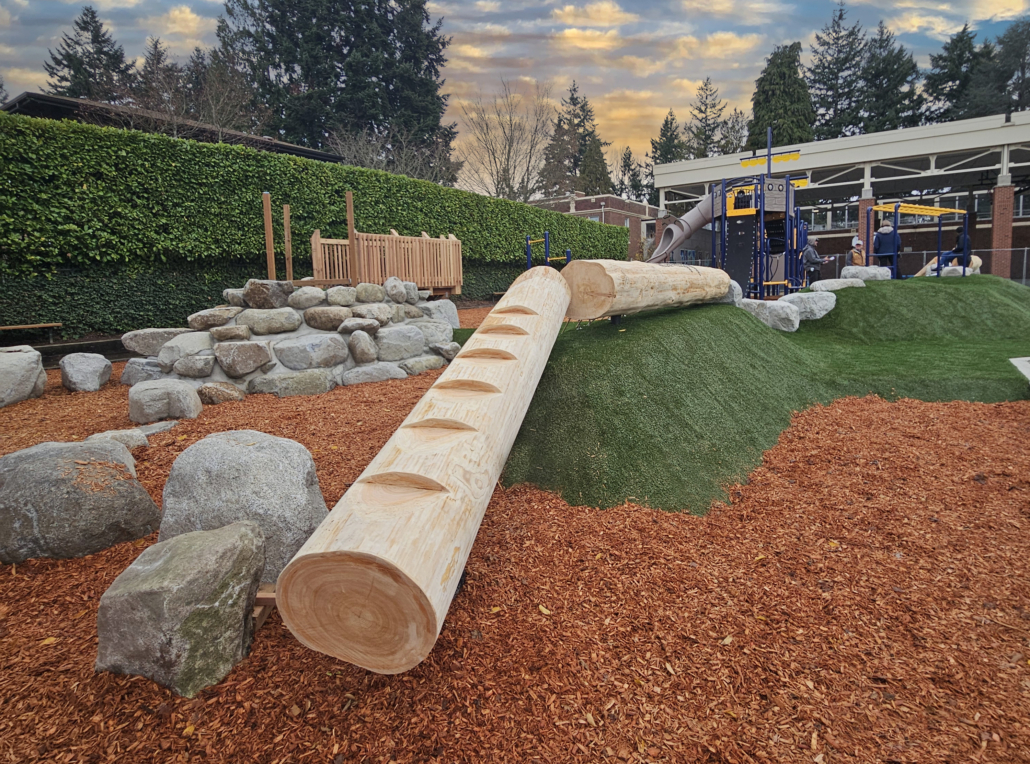
Villa Academy wanted to transform its aging playground into a nature-rich environment that encouraged imagination, curiosity, and community rather than focusing primarily on competitive sports. Learning Landscapes Design collaborated with school leadership, teachers, and staff through a design presentation, site walk, and workshop to establish priorities for children ages 5–11.
Inspired by the school’s Voyager mascot, LLD integrated a two-story ship-themed climbing structure into a natural landscape of hills, logs, and boulders. Surrounding spaces offer sensory exploration, loose parts, imaginative play, social gathering, and small-group games, while preserving areas for traditional sports. The result is a distinctive natural school playground that supports different play styles, encourages child-led discovery, and reflects Villa Academy’s educational values.
A Process Designed for Student Integration, School Leadership, and Facilities Teams
- Collaborative visioning with leadership, facilities staff, and student teams
- Student-centered design thinking that supports child development
- 7 Step safety process that addresses ASTM and best-practice guidelines
- Constructible documents suitable for bidding and permitting
- Maintenance and Management Guidelines to support long-term success
We understand the realities of school operations and design spaces that are inspiring and practical.
The Long-Term Impact of Investing in Outdoor Learning Spaces
Private schools that invest in green schoolyards and natural playgrounds consistently report:
- Increased student engagement and joy
- Stronger alignment between campus and curriculum
- Positive feedback from prospective families
- Spaces that evolve and remain relevant over time
These environments don’t just serve today’s students—they become part of a school’s legacy.
Designing the Next Chapter of Your Campus
If your school is exploring ways to:
- Enhance student experience
- Align campus spaces with educational values
- Strengthen enrollment and advancement efforts
- Invest in meaningful, lasting infrastructure
Private School Green Schoolyards and Natural Playgrounds may be one of the most impactful projects you can undertake.
Learning Landscapes Design works with private schools across the United States to design outdoor learning environments that are beautiful, thoughtful, and deeply aligned with mission.
We’d love to help you imagine what’s possible on your campus.