
Confederated Tribes of Grand Ronde Nature Park and Playscape
Grand Ronde, OR – Pacific Northwest US
Project Overview
A nature-based playscape designed within an existing forest to support community gathering, cultural expression, and inclusive play.
Play Design Features
- Nature playscape integrated within existing forest
- Cultural play elements inspired by traditional practices
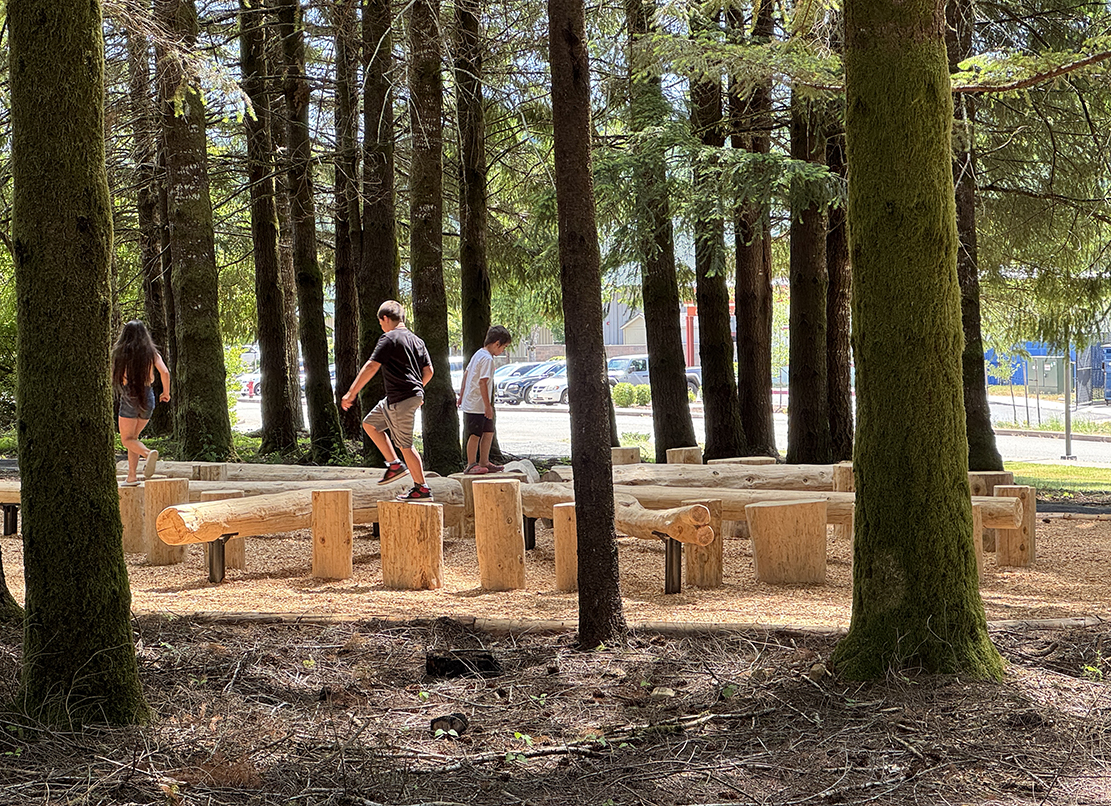
- Natural climbing, balancing, and movement based play
- Sensory and imaginative play opportunities
Project Information
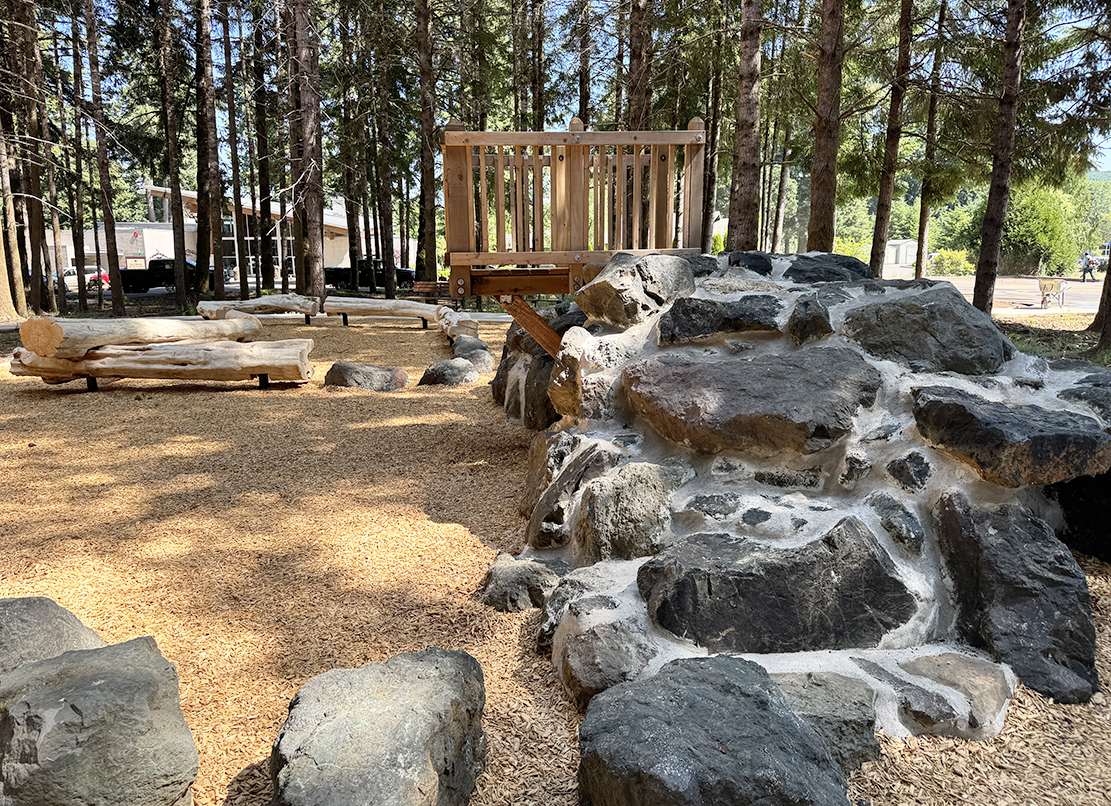
Planned within an existing forest, The Confederated Tribes of Grand Ronde‘s Nature Park and Playscape is designed to honor both the natural environment and cultural heritage. A winding pathway guides visitors through a shaded canopy to a series of play gathering spaces. The main trail connects to the Elder Center and Shawash-iliʔi Skul early childhood facility. Park features include a sunny picnic area with a sensory garden, multiple play areas, a native plant garden, and forest exploration zone with a gather space. These spaces feature natural materials such as logs, boulders, and water. The alignment of the pathway was carefully planned to preserve the majority of the mature trees, maintaining the integrity of the existing forest.
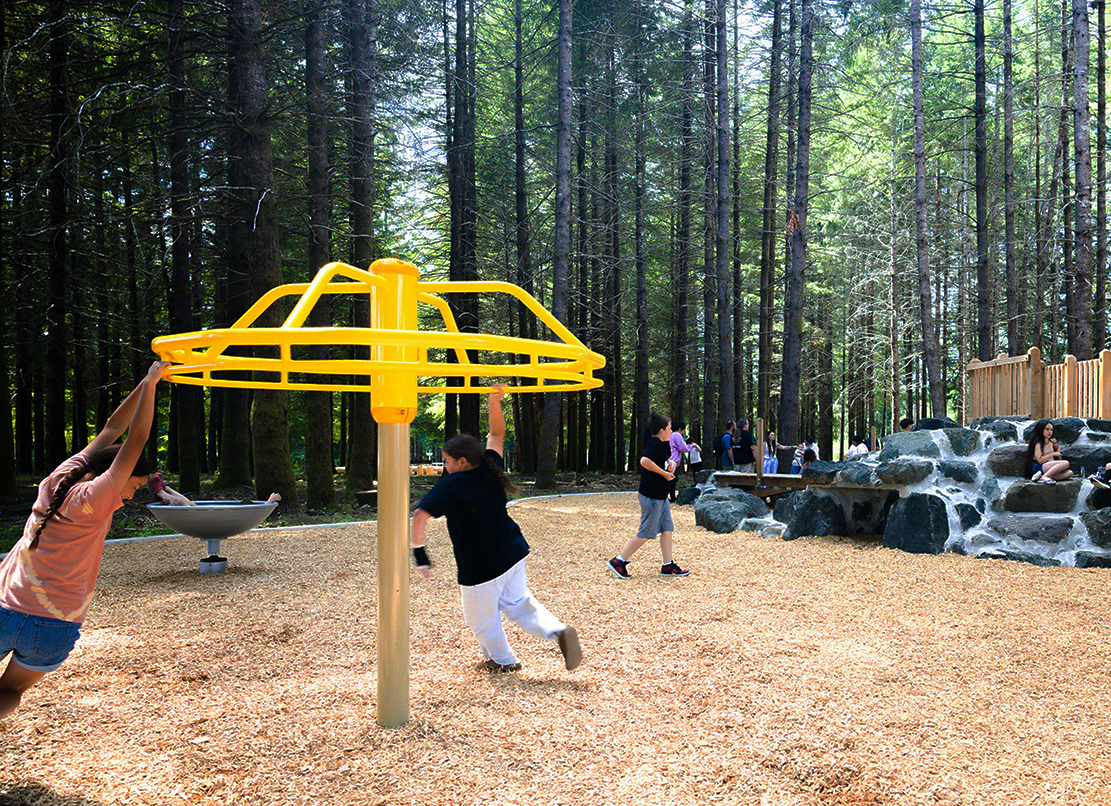
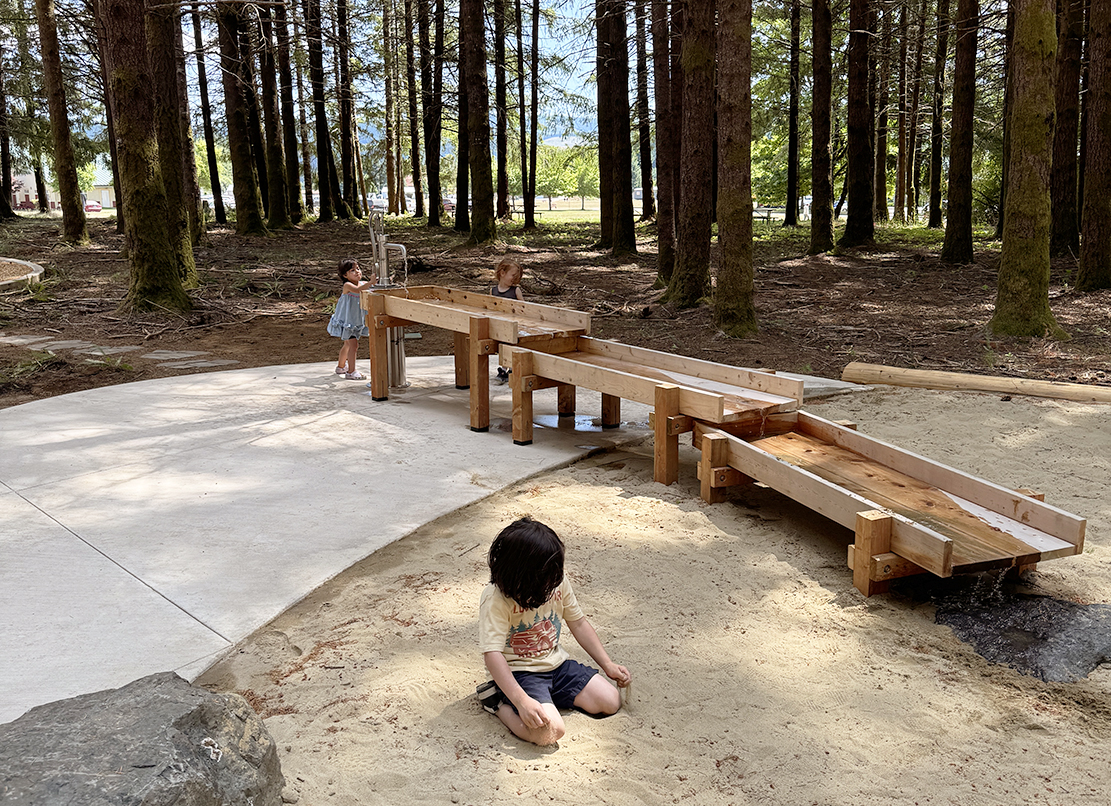
In alignment with the Tribe’s vision, each play space is designed to support community use and gathering. The entire site is accessible via ADA-compliant routes. Inclusive playground features in each area ensure a welcoming environment for all users. The playscape celebrates cultural traditions by three fishing deck play features. Additional physical play elements include a boulder scramble, log climbers, and spinners. These elements support movement and help develop gross motor skills. A separate area includes sensory and imaginative play elements. These are centered around a large sand digging area, a water pump, a carved canoe, a living willow fort, and carved animal sculptures of local wildlife.
A native plant sensory garden is woven into the site, with stepping stones guiding visitors through planting areas that support exploration and engagement. Small play and interpretive features hint to the wildlife that use the site. This includes exploration for play features as well as signs of local wildlife. Together, these elements create an immersive nature play environment that connects users to both the ecology of the site and the cultural identity of the community.