
Understanding Playground Safety in Natural Play Environments : ASTM and CPSC Guidelines
This article covers the basics of playground safety in natural play environments. It covers a quick background in the applicable guidelines, when they apply, common misconceptions, and a framework for applying guidelines to non traditional play spaces.
Understanding Playground Safety Standards ASTM & CPSC
Playground safety guidelines in the United States is primarily governed by two key frameworks:
- ASTM International playground safety standards (ASTM F1487 and related standards)
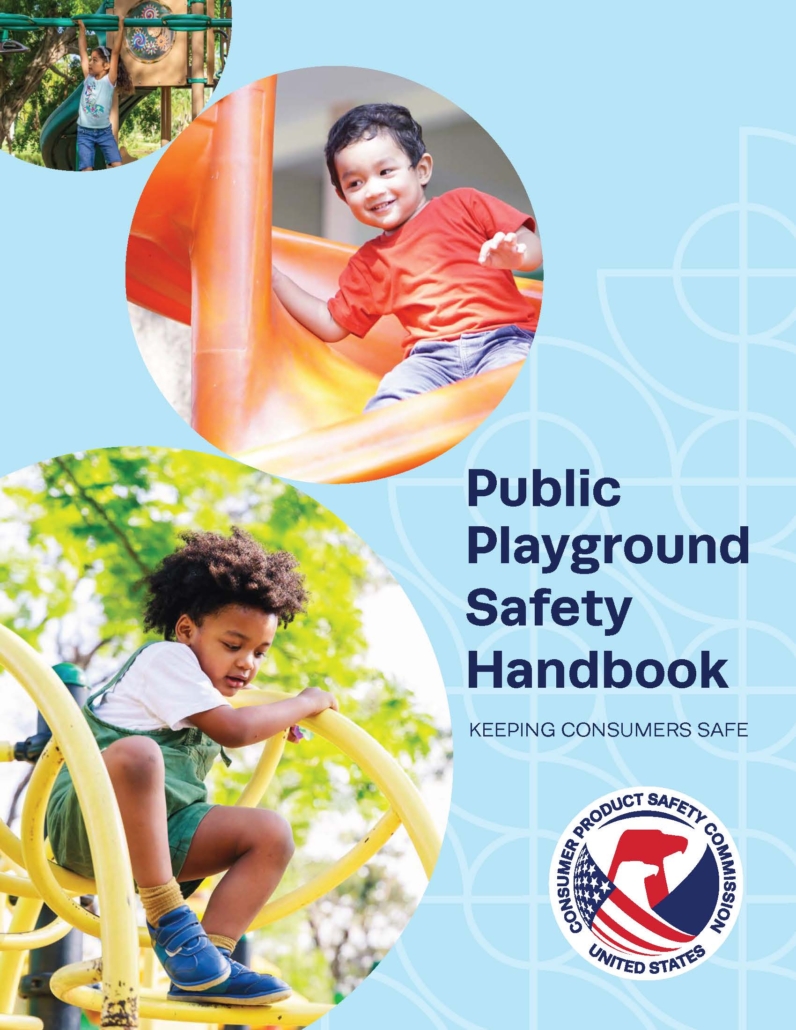
- U.S. Consumer Product Safety Commission (CPSC) Public Playground Safety Handbook
https://www.cpsc.gov/safety-education/safety-guides/playgrounds
These guidelines define widely accepted best practices for reducing serious injury risk in public playground environments. They focus on addressing debilitating injury and death. Keep in mind this does not directly focus on things like splinters, long bone fracture, or bumps and scrapes.
They address:
- fall height limits
- impact-attenuating surfacing
- spacing and layout requirements
- entrapment and entanglement risks
- structural integrity and durability
However, these standards were primarily developed for manufactured, post-and-platform playground systems, where equipment is standardized and predictable.
As playground design evolves toward more natural, landscape-based environments, designers increasingly encounter elements that fall outside traditional prescriptive guidance, including:
- logs and timber structures
- boulders and rock climbing elements
- earth berms and landforms
- sand and water play systems
- planted and ecological systems
In many of these cases, ASTM and CPSC guidance still apply, but can often require professional interpretation. This creates a critical reality in modern playground design:
Safety standards define the baseline, but do not fully define approaches to natural play environments.
State Licensing Requirements for Natural Playgrounds
Playground safety is also governed by local and state licensing requirements and jurisdictional review processes, which can be especially important for preschool and early childhood environments. These reviews often introduce additional layers of oversight beyond design standards, including:
- Childcare licensing requirements for outdoor play areas
- Local building or health department inspections
- Fire marshal or emergency access considerations
- Ongoing third-party safety inspections or certification requirements
For preschool and early learning settings, these jurisdictional requirements can be as influential as national standards in determining how a play space is approved, operated, and maintained over time.

Playground Safety in Natural Play Environments
At Learning Landscapes Design, we understand that natural playgrounds must meet the intent of established safety standards while responding to materials and systems that are not always explicitly defined within them.
We design in alignment with ASTM and CPSC guidelines, supported by CPSI-certified staff and ongoing review of evolving safety practices in the playground industry.
American ASTM standards and Canadian CSA standards are closely aligned, and we reference both where applicable.
Our team also participated in the national steering committee for the Guidelines for Natural Play and Learning Areas, including work on the subcommittee focused on risk and liability. This experience informs our understanding of where safety standards are clearly defined—and where professional judgment is required.
In playground design, it is important to distinguish between risk and hazard.
Risk is a natural and necessary part of play. Children benefit from opportunities to climb, balance, explore, and test their abilities in ways that build confidence and judgment.
Hazards are different than risks in that they are hidden or unintended conditions that a child cannot reasonably anticipate and that may lead to serious injury.
In our work, the goal is not to eliminate all risk, but to thoughtfully design environments where meaningful play challenges are preserved while foreseeable hazards are identified, minimized, or removed through careful planning, material selection, and ongoing maintenance.
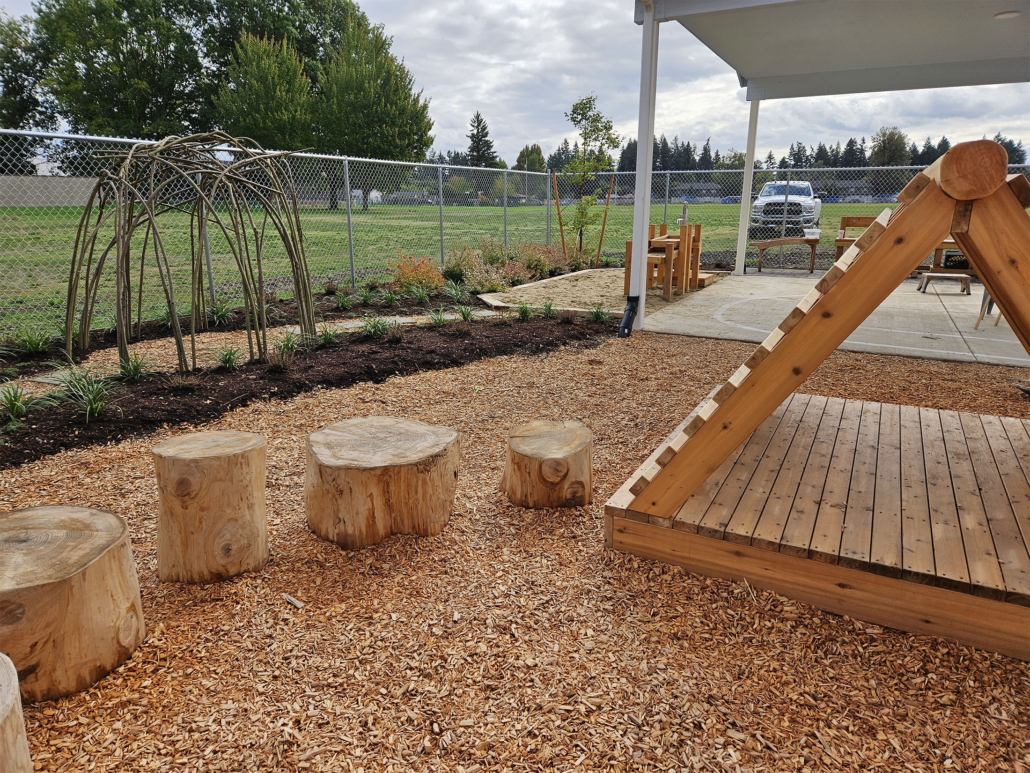
How We Apply Playground Safety Standards
For playground safety in natural play environments, we follow three core principles:
- Apply safety standards wherever they clearly apply and in places where applying them is easy and just makes sense.
- Apply standards more rigorously in higher-risk physical play zones where fall and impact risk is greatest. We talk about this as areas where children are asked to ‘play with their feet off the ground.’
- Clearly identify gray areas where interpretation of ASTM and CPSC guidelines is required.
This approach ensures that safety is not assumed. It is intentionally designed, documented, and communicated.
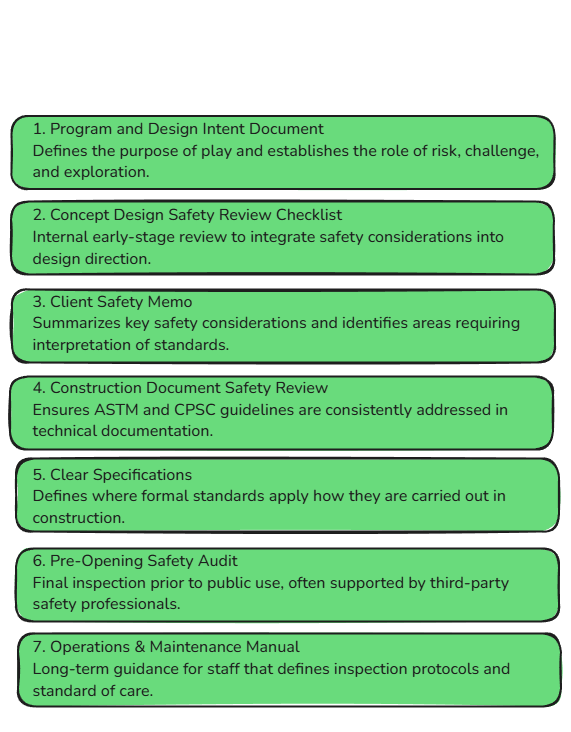
Our Playground Safety Process at Learning Landscapes Design
Because natural playgrounds extend beyond standardized equipment systems, we have developed a structured safety process from concept through long-term operation.
Playground Maintenance and Long-Term Safety
Playground safety does not end at construction. It continues throughout the life of the project.
Natural playgrounds require a different maintenance approach than traditional equipment-based systems. Materials evolve over time, and site conditions change with use and season. Procedures like impact surface testing are important.
Without clear guidance, this can lead to inconsistency in maintenance practices and uncertainty for facility teams.
To address this, Learning Landscapes Design provides a detailed Maintenance & Management Framework that includes:
- Defined design intent and acceptable site conditions
- Clear “standard of care” expectations
- Inspection schedules and procedures
- Maintenance priorities and frequency guidance
- Sample documentation tools for staff
This framework supports facilities teams by translating the design intent into practical operational steps.
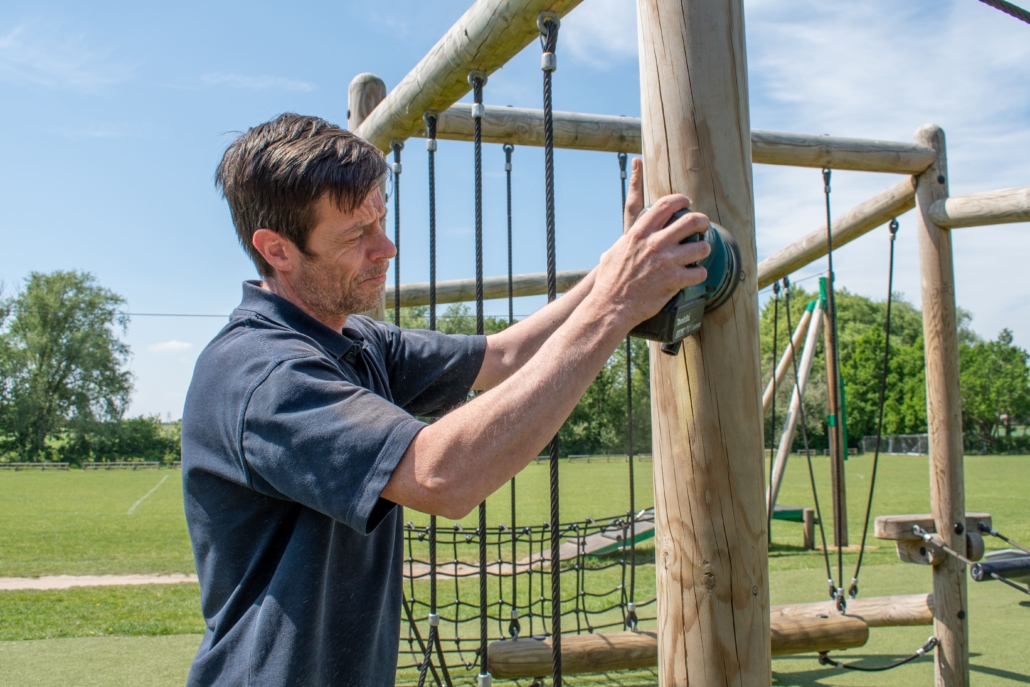
When maintenance staff are equipped with clear systems, natural playgrounds remain safe, functional, and engaging over time. This tool gives your facilities staff the ability to feel successful in their role. This partnership is key to the long-term success of a natural playground.
Common Misconceptions About Playground Safety in Natural Play Environments
Natural playground safety is often misunderstood. Below are some of the most common misconceptions we encounter and how we address them in practice.
- “Natural materials don’t need to follow safety guidelines.”
This is not true. Natural materials such as logs, boulders, and landforms if included as part of a designed play environment must be evaluated for compliance with safety guidelines. - “Small or private sites aren’t considered public playgrounds.”
Many assume churches, preschools, or neighborhood spaces are exempt. In most cases, if a playground is accessible to groups of children beyond a single household, it is considered a public-use playground and subject to applicable safety guidelines. - “Residential playground equipment can be used in commercial settings.”
Residential-grade equipment is not designed for public or commercial use and does not meet the same ASTM safety guidelines required for those environments. It cannot be substituted for commercial playground systems in public-use settings. - “Anyone can build a compliant playground without professional help.”
While it is possible to design and build a compliant playground independently, the process is highly technical. Proper application of safety guidelines requires expertise in layout, surfacing, fall heights, entrapment risks, and documentation. Most projects benefit from professional design and safety review to ensure correct interpretation and application.
Conclusion: Safety in Natural Playground Design
Playground safety in natural environments is not about removing risk. It is about applying established standards thoughtfully within evolving landscape-based systems.
At Learning Landscapes Design, we bridge the gap between ASTM and CPSC guidelines and the realities of natural play environments. Our role is to ensure that safety is consistently considered while preserving the creativity, challenge, and learning potential of natural playgrounds.